
Introduction
Vitamins A, D and E are essential fat-soluble vitamins that play a significant role in sustaining overall health as well as immunity and bone strength, skin function and protection of cells. Modern nutrition science has established that these vitamins are regarded as the basis of long-term health since the body can’t make them in sufficient quantities by itself, which makes eating a balanced diet or taking supplements extremely vital.
In 2026, the changes in our lifestyles and the consumption of processed foods and a decrease in sunlight exposure have led to the deficiency in Vitamin A and D more frequent than they have ever been. Understanding how these vitamins function together can improve the quality of your energy levels, improve your immunity, boost vision and help protect your body from chronic stress and oxidative illnesses. This comprehensive guide explains everything in a concise practical, easy to follow, and informative manner so that you can improve your diet to the best of your ability.
What Are Vitamin A D and E?
Vitamin A D and E belong to the class of fat-soluble vitamins. That means these vitamins are stored inside the fat tissues and liver instead of being eliminated as quickly as water-soluble vitamins. Due to this ability to store they are extremely potent, however they must be consumed in a balanced amount to avoid deficiency and toxicity.
Each vitamin has a distinct biological purpose:
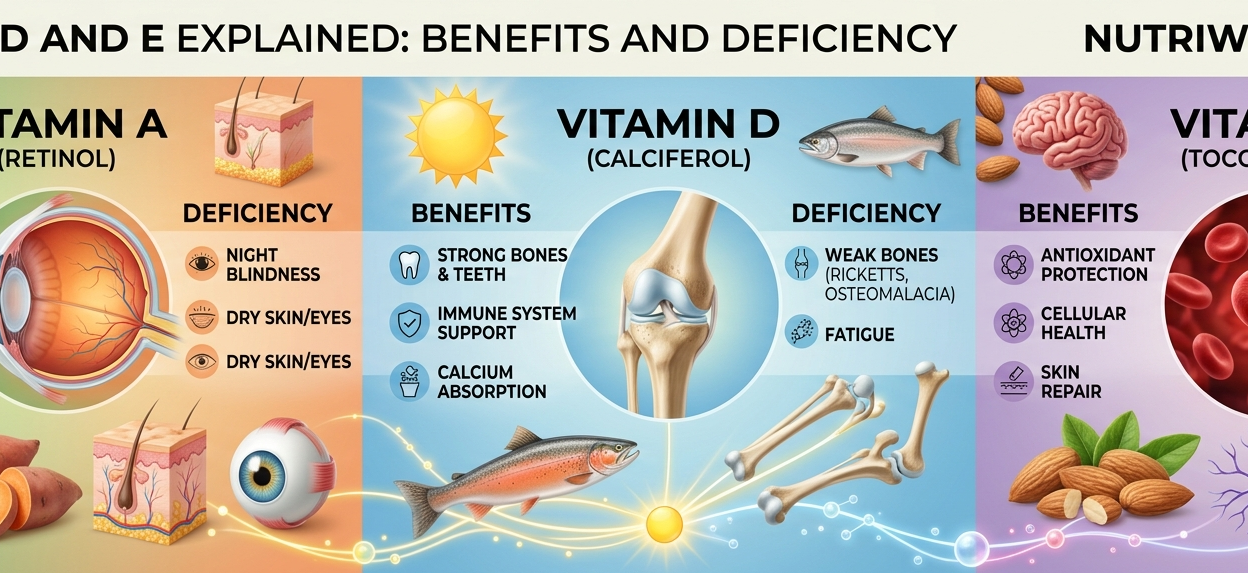
- Vitamin A helps with vision, repair of the skin and also immune defense
- Vitamin D regulates the absorption of calcium and bone health
- Vitamin E is an antioxidant that protects cells from harm
Together, they make up an important nutritional trio that has an impact on the majority of major systems in the body.
Importance of Vitamin A D and E in Human Health
The function of Vitamin A and D is more than basic nutrition. These nutrients function at the cellular level to ensure the balance, repair damages, and regulate vital body functions.
Vitamin A is essential for healthy eyesight and also protects the tissue of the eyes. Vitamin D helps ensure that bones are strong through helping the body absorb calcium and Phosphorus. Vitamin E helps protect cells from stress caused by oxidative which slows down the process of aging, as well as helping to maintain the health of your skin and heart.
If these vitamins are well-balanced they perform efficiently. If they’re deficient various systems begin to weaken, resulting in an increase in fatigue, weakened immunity bone health issues, as well as skin problems.
Vitamin A: The Vision and Immunity Vitamin
Vitamin A is among the most vital nutrients to ensure good vision and a healthy immune system. It is available in two forms of Retinol (from the animal source) in addition to beta-carotene (from plants).
Role of Vitamin A in the Body
Vitamin A helps in the production of pigments within the retina, which allow you to see even in low-light conditions. Without it night blindness and the loss of vision can occur. It also aids in maintaining the skin’s integrity and mucous membranes. It acts as a shield against infection.
Another vital purpose is the support of the immune system. Vitamin A helps to boost white blood cell function aiding the body in fighting illnesses more effectively.
Benefits of Vitamin A
The regular intake of vitamin A offers numerous health benefits:
- Clear and sharp vision is supported.
- Increases the immune system’s response
- Improves the appearance of skin and reduces acne
- Helps to promote cell growth and development
- Improves the health of reproductive health for women and men
Deficiency of Vitamin A
The absence of vitamin A can cause serious health issues, including dry eyes at night frequent infections, as well as the slow healing of wounds. In the most severe instances it may result in complete vision loss.
Vitamin D: The Sunshine Vitamin for Strong Bones
Vitamin D is commonly referred to for its role as”the “sunshine vitamin” because the body produces it when its surface is exposed to light. It plays an important role in the health of bones and immune system regulation as well as hormone balance.
Role of Vitamin D in the Body
Vitamin D assists the body to get rid of calcium and phosphorus which are vital minerals to strong teeth and bones. If vitamin D levels aren’t sufficient bones are weak, stiff, and more vulnerable to breakage.
It also improves immune function and decreases inflammation within the body. Recent research suggests that vitamin D plays an important function in the regulation of moods and can help ease the symptoms of depression and fatigue.
Benefits of Vitamin D
- The strengthening of bones and teeth
- Increases calcium absorption
- Supports immune defense
- It helps regulate mental and mood
- Reduces the risk of developing bone-related illnesses such as osteoporosis
Deficiency of Vitamin D
Vitamin D deficiency is a common occurrence because of indoor living and a lack of sun exposure. Signs of it include muscle pain, bone fatigue, weakness and a higher likelihood of developing infections. Deficiency over time can lead to osteoporosis and rickets for children. for adults.
Vitamin E: The Powerful Antioxidant Protector
Vitamin E is an antioxidant fat-soluble that shields cells in the body from damage caused by oxidative free radicals. Vitamin E plays a crucial part in maintaining skin health, heart health, and also in supporting the immune system.
Role of Vitamin E in the Body
Vitamin E protects cell membranes and protects them caused by environmental stress, pollution and the toxins. It also enhances blood circulation and promotes healthy skin as it ages.
Vitamin A is particularly important to protect nerves and maintaining healthy vision when combined with vitamin A.
Benefits of Vitamin E
- Helps protect cells from the oxidative stress
- Skin is healthy and glowing.
- Helps maintain the health of the heart and blood circulation
- Strengthens immune function
- Reduces wrinkles
Deficiency of Vitamin E
Vitamin E deficiencies are uncommon however it can be seen in those who have poor absorption of fat. The symptoms could include eye problems, muscle weakness and a weak immune response.
Comparison of Vitamin A D and E
| Feature | Vitamin A | Vitamin D | Vitamin E |
|---|---|---|---|
| Primary Function | Immunity and vision | Absorption of calcium and Bone Health | Antioxidant protection |
| Solubility | Fat-soluble | Fat-soluble | Fat-soluble |
| Main Sources | Carrots, liver, spinach | Sunlight, fish, eggs | Nuts, seeds and vegetable oils |
| Deficiency Effects | Night blindness or infections | Weak bones, fatigue | Muscle weakness, oxidative damage |
| Key Benefit | Health of the eyes and immune system | Teeth and strong bones | Skin health and protection from cell damage |
Signs of Vitamin A D and E Deficiency
Deficiencies of vitamins A, D and E can be a slow-growing issue and are usually not detected until the early stages. The body exhibits warning indicators that should not be overlooked.
Common signs are:
- A lot of illness and weak immunity
- Low energy and persistent fatigue
- Dry skin, loss of hair or dull, drab complexion
- Muscle weakness or pain in the bone
- Problems with vision, especially at night.
Early recognition of these signs will help avoid long-term issues and help restore balance with proper nutrition.
Natural Sources of Vitamin A D and E
A balanced diet is the most effective method to maintain the proper levels of these vital nutrients. A variety of healthy food items ensures maximum absorption and efficiency.
- Carrots and sweet potatoes and spinach are rich in vitamin A.
- Salmon, exposure to sunlight, and eggs to get vitamin D
- Sunflower seeds, Almonds and vegetable oils to provide vitamin E
A nutritious diet that is rich in nutrients and healthy fats will help your body’s absorption of these nutrients better.
Supplementation and Safety Considerations
While the natural foods available are ideal, many are in need of supplements for their their daily needs, specifically vitamin D. But, since vitamins A, D, and E have fat-soluble properties, over intake could cause a buildup of fat in the body.
Vitamin A in excess can result in toxicity symptoms such as nausea or stress in the liver. In excess vitamin D could result in calcium buildup and extremely excessive vitamin E intake can cause blood clotting issues.
To this end, supplements must be a balanced process and adapted to individual nutrition needs.
Daily Requirements of Vitamin A D and E
The daily intake requirements for food depend on gender, age, and health conditions. Generally:
- Vitamin A: Essential in micrograms to support vision and to boost immunity
- Vitamin D required within International units (IU) to maintain bone health
- Vitamin E is a must in milligrams to protect against antioxidants.
Keeping these levels in check by eating a balanced diet and exposure to sunlight will ensure long-term stability in health.
Common Myths About Vitamin A D and E
There are many misconceptions regarding these vitamins, which leads to confusion regarding the choices for nutrition.
A common misconception says that having more nutrients means greater health. However, excessive intake of vitamins could cause harm. Another myth states that sunlight is sufficient to get vitamin D, however the type of skin and lifestyle affect the production of vitamin D in a significant way.
It’s also a myth it is true that Vitamin E supplements will immediately improve the health of skin however it is important to maintain a consistent diet to see visible outcomes.
Conclusion
Vitamins A, D and E are vital nutrients that provide the basis of healthy immunity, strong sight, strong bones and protection of cells. In 2026, maintaining healthy amounts of the vitamins will be more crucial than ever before due to the modern challenges of life and food inconsistencies.
Knowing their roles in each and the benefits they bring together can help you make better choices regarding your nutrition. The right diet and regular sun exposure and mindful supplementation can make sure that the body gets all the nutrients it requires for long-term health and vitality.
When you focus on these essential nutrients, you can build a healthier, stronger, and more durable body that is capable to perform at its peak each and every day.
FAQs
1. Why is Vitamin A D and E important for your body?
They help improve vision bone strength, immune system and guard cells against injury, which makes them vital to overall health.
2. Do I have to combine vitamins A, D and E with each other?
Yes you can take them together since these are both fat-soluble vitamins but the dosage should be regulated.
3. Which foods are the most rich of vitamin A D and E?
Carrots, eggs, fish Nuts, seeds, as well as leafy greens are some of the most nutritious natural sources.
4. What happens if there is an insufficiency of these vitamins?
Insufficiency can lead to weak immunity as well as bone and fatigue, and vision problems.
5. Do you think that sunlight is enough to meet vitamin D?
Sunlight is beneficial, however food and supplements might be required based on the the lifestyle and place of residence.