
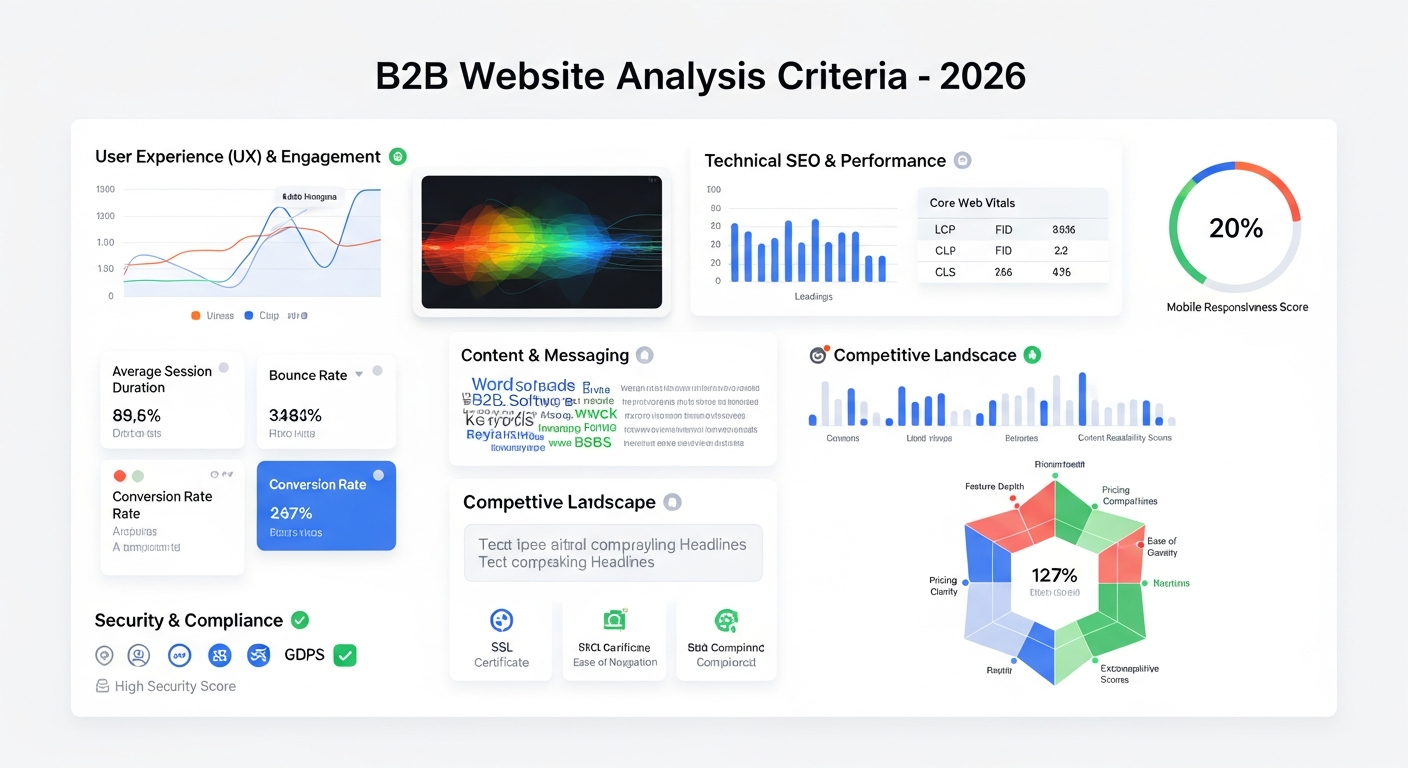
In the B2B software space, a website is no longer just a digital brochure. It is a primary sales channel, a trust-building platform, and often the first point of contact between a software provider and a decision-maker. Understanding B2B software company website analysis criteria is essential for evaluating credibility, usability, performance, and conversion readiness.
This guide explains how professional analysts evaluate B2B software websites, what criteria matter most in 2026, and how businesses can identify strengths, gaps, and growth opportunities using structured, data-driven analysis.
Why Website Analysis Matters for B2B Software Companies
B2B buyers behave differently from consumers. They:
- Research extensively
- Compare multiple vendors
- Involve multiple stakeholders
- Expect clarity, proof, and reliability
A software company’s website must support this journey. Proper analysis helps determine whether a site:
- Builds trust with enterprise buyers
- Clearly communicates value
- Supports lead generation
- Aligns with modern search behavior
That’s why B2B software company website analysis criteria have become a core part of competitive intelligence and market research.
Core B2B Software Website Analysis Criteria
1. Value Proposition Clarity

The first and most important criterion is how clearly the website explains:
- What the software does
- Who it is for
- What problem it solves
A strong B2B software website communicates its value within seconds—without jargon or vague claims.
Key evaluation points:
- Clear headline above the fold
- Industry-specific messaging
- Outcome-focused benefits
If visitors must scroll or guess, the value proposition is weak.
2. Target Audience Alignment
B2B software websites must speak directly to decision-makers such as:
- CTOs
- CIOs
- Operations leaders
- Data managers
- Procurement teams
Analysis should assess whether content is tailored to:
- Specific industries
- Company sizes
- Use cases
Generic messaging often signals low maturity in B2B positioning.
3. Information Architecture and Navigation
Complex software requires structured presentation. Analysts evaluate:
- Menu clarity
- Logical page hierarchy
- Easy access to key pages
Important pages usually include:
- Product overview
- Features and capabilities
- Use cases
- Pricing or pricing logic
- Documentation or resources
Good navigation reduces friction and increases engagement.
4. Content Depth and Authority
High-quality content is a trust signal in B2B markets. Website analysis focuses on:
- Educational depth
- Accuracy
- Relevance to buyer pain points
Strong B2B software websites include:
- Detailed product explanations
- Industry insights
- Technical resources
- Whitepapers or guides
Thin or marketing-only content often underperforms in organic search and buyer trust.
SEO and AEO Criteria for B2B Software Websites
5. Search Engine Optimization (SEO) Structure
A major part of B2B software company website analysis criteria involves technical and on-page SEO, including:
- Clean URL structure
- Proper heading hierarchy (H1, H2, H3)
- Keyword intent alignment
- Internal linking
Well-optimized websites attract qualified traffic instead of irrelevant visits.
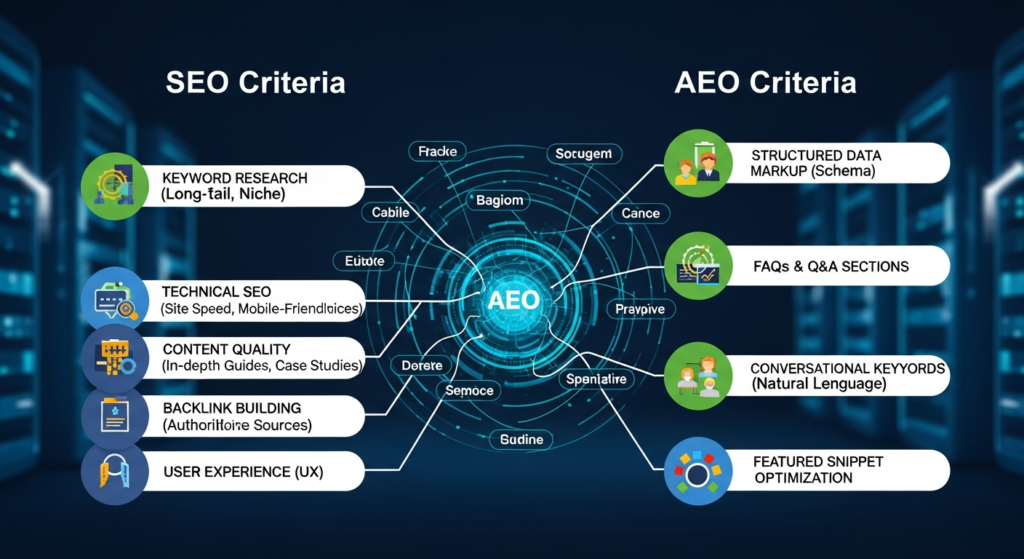
6. Answer Engine Optimization (AEO)
In 2026, buyers increasingly rely on:
- Featured snippets
- AI summaries
- Voice search
Websites are analyzed for:
- Clear question-and-answer formatting
- FAQ sections
- Concise explanations
AEO-friendly content improves visibility beyond traditional search results.
7. GEO Relevance and Market Targeting
For software companies serving specific regions, analysis includes:
- Regional language cues
- Compliance references
- Local case studies
Websites that reflect geographic relevance tend to convert better and rank more consistently in targeted markets.
Trust and Credibility Signals
8. Proof of Expertise and Experience
B2B buyers want evidence. Website analysis looks for:
- Case studies
- Client success stories
- Industry partnerships
- Certifications
These elements reduce risk perception and shorten decision cycles.
9. Transparency and Business Legitimacy
Trustworthy B2B software websites clearly display:
- Company background
- Contact information
- Support channels
- Legal and compliance pages
Lack of transparency raises red flags for enterprise buyers.
User Experience (UX) and Performance Criteria
10. Website Speed and Performance
Slow websites lose credibility. Analysis includes:
- Load time
- Mobile responsiveness
- Stability
Performance directly affects:
- Bounce rates
- Search rankings
- Lead conversions
11. Conversion Path Optimization
A B2B software website should guide users toward action. Analysts examine:
- Call-to-action clarity
- Demo or trial access
- Contact forms
Effective sites balance information with conversion prompts – without pressure.
Technical and Security Evaluation
12. Data Security and Compliance Indicators
Security matters in software evaluation. Websites are assessed for:
- HTTPS encryption
- Privacy policies
- Compliance references (where applicable)
These insights reassure buyers handling sensitive data.
13. Scalability and Product Documentation
Enterprise buyers look for long-term solutions. Analysis includes:
- API documentation
- Integration details
- Product roadmaps
Clear documentation signals readiness for growth and integration.
Competitive Benchmarking Criteria
14. Differentiation from Competitors
Strong B2B software websites clearly explain:
- What makes the solution different
- Why it’s better for specific use cases
Without differentiation, price becomes the only deciding factor.
15. Market Positioning and Messaging Consistency
Consistency across:
- Homepage
- Product pages
- Blog content
is critical for brand credibility and search performance.
How Professionals Use These Analysis Criteria
Experts apply these criteria to:
- Compare multiple software providers
- Identify market gaps
- Support investment decisions
- Guide product positioning
Structured analysis helps organizations move beyond surface-level impressions and focus on measurable quality indicators.
Common Mistakes Found in B2B Software Websites
- Overuse of buzzwords
- Unclear pricing logic
- Missing use cases
- Weak SEO foundations
- Poor mobile experience
Avoiding these mistakes significantly improves both ranking and conversions.
Frequently Asked Questions (FAQs)
What are B2B software company website analysis criteria?
They are structured factors used to evaluate usability, credibility, SEO, content quality, and conversion readiness of B2B software websites.
Why is website analysis important in B2B software?
Because buyers rely heavily on online research before making purchasing decisions.
Does SEO matter for B2B software websites?
Yes. SEO drives qualified traffic and supports long-term visibility.
How often should a B2B software website be analyzed?
At least annually, or after major product or market changes.
Conclusion
Understanding B2B software company website analysis criteria is essential for anyone evaluating, building, or improving a software brand’s digital presence. A strong website does more than look professional – it communicates value, builds trust, supports search visibility, and drives informed decision-making.
In 2026, the most successful B2B software companies are those that align content, performance, and credibility into a single, cohesive web experience. Applying these criteria helps ensure that alignment—and sets the foundation for long-term growth and authority.