Introduction
Freelancing and content work often depend on trust. You do the work first, and the client pays afterward. Most of the time, this arrangement works fine. But sometimes it doesn’t, and the freelancer is the one left with nothing.
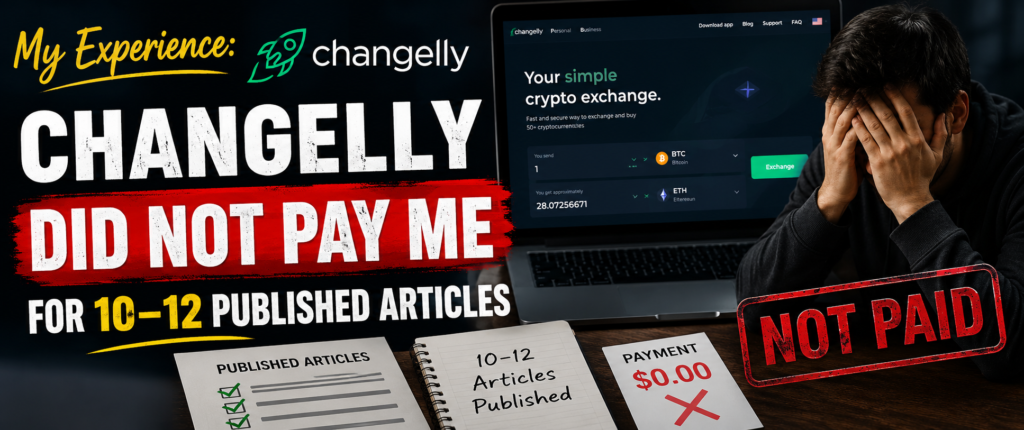
This is my personal account of working with Changelly, a crypto exchange platform, on a content project. I wrote and helped get published between 10 and 12 articles for their website. After the work was completed and the content went live, the payment I was promised never arrived, and my follow-up messages went unanswered.
I’m sharing this experience so other freelancers and content creators know what happened, and so they can protect themselves before taking on similar work. This is not a legal accusation — it is simply what happened to me, based on the work I completed and the communication I have on record.
What the Work Involved
The Scope of the Project
The work was straightforward content writing. I produced articles intended for publication on a website associated with Changelly. Over the course of the engagement, between 10 and 12 articles were written, delivered, reviewed, and ultimately published live on the site.
Publication matters here. This wasn’t a case of submitted drafts sitting unused — the content was actively put to use. The website benefited from the traffic, SEO value, and content depth that these articles provided.
Why This Detail Matters
When a company publishes freelance work, it’s a clear signal that the content met their standards and was considered valuable enough to use. That’s an important point for anyone reading this: the dispute here isn’t about quality. The work was accepted and used. The dispute is about what happened after that.
What Happened After Publication
No Payment Was Made
Once the articles were live, I expected payment to follow, as is standard in freelance and content work. Instead, no payment was made for any of the published articles.
This wasn’t a partial payment situation or a delay of a few days. It was a complete absence of payment for work that had already been delivered and used.
No Response to Follow-Ups
I reached out multiple times to ask about the payment status. I did not receive a response. No explanation, no updated timeline, no acknowledgment of tht — just silence.
For anyone who has done freelance work, this pattern will sound familiar:
Why This Matters for Other Freelancers
The Risk of Publish-Now, Pay-Later Arrangements
Many companies, especially those in fast-moving industries like crypto, ask writers to deliver content before finalizing payment terms in writing. This creates risk for the freelancer, because once the content is published, the client has already received the value they wanted.
If there’s no signed contract, deposit, or milestone-based payment structure, the freelancer has very little leverage after that point.
Red Flags to Watch For
Based on my experience, here are patterns worth being cautious about when taking on content work for any company:
| Red Flag | Why It Matters |
|---|---|
| No written contract before work begins | Leaves no formal record of payment terms |
| Payment only “after publication” with no milestones | Gives the client all the leverage once content is live |
| Vague or shifting payment timelines | Often a sign of stalling |
| Communication that slows down after delivery | Common pattern before non-payment |
| No response to direct payment inquiries | A strong warning sign that payment may not come |
None of these signs guarantee a bad outcome on their own. But when several appear together, as they did in my case, it’s worth taking seriously.
Steps I’m Taking Now
Documenting Everything
I kept records of the work agreement, the delivered articles, the links to the published content, and my follow-up messages. This documentation is essential if a freelancer ever needs to pursue a formal complaint or dispute resolution.
Filing Complaints Through Proper Channels
Rather than relying only on public statements, I’m pursuing recognized channels for reporting unpaid freelance work, including:
- Freelance platform dispute resolution (if the work was arranged through one)
- Consumer or business complaint boards
- Relevant industry watchdog or review platforms
Warning Other Freelancers
Sharing this experience publicly, with facts rather than assumptions, is meant to help other writers and freelancers make informed decisions before agreeing to similar work.
How to Protect Yourself Before Taking Similar Work
Get Terms in Writing
Before starting any content project, get the payment amount, timeline, and method confirmed in writing — even a simple email exchange is better than a verbal agreement.
Use Milestone Payments
Where possible, request partial payment upfront or after each batch of delivered articles, rather than waiting until the entire project, or publication, is complete.
Keep Records of Delivery and Publication
Save links, timestamps, and correspondence for every piece of work delivered. This becomes critical evidence if a payment dispute arises later.
Set a Follow-Up Timeline
If payment doesn’t arrive within the agreed window, follow up promptly and in writing. A documented paper trail matters more than a single conversation.
Frequently Asked Questions
Did Changelly explain why payment wasn’t made? No. I did not receive any explanation, updated timeline, or acknowledgment after following up multiple times. The lack of response is part of what prompted me to document and share this experience.
Was the work actually published? Yes. Between 10 and 12 articles were completed, delivered, and published live on the associated website, confirming the content was used.
Do I have proof of the work and communication? Yes. I have records of the work delivered, the published content, and my follow-up messages regarding payment.
What should other freelancers do before working with a similar client? Get payment terms in writing, request milestone-based payments where possible, and keep detailed records of delivered and published work from the start.
Is this article a legal accusation against Changelly? No. This is a first-person account of my personal experience and the facts as they occurred. I am not making legal claims, only describing what happened and what steps I’m taking.
What can I do if I’m currently owed payment by a client? Document everything, follow up in writing, and use formal complaint channels such as freelance platform disputes or consumer complaint boards if direct communication fails.
Final Thoughts
Unpaid work is a real and frustrating problem in the freelance and content industry, and it deserves to be talked about honestly. In my case, I delivered 10 to 12 articles for Changelly, saw them published and put to use, and then received no payment and no response to my follow-ups.
I’m sharing this experience so other freelancers can recognize the warning signs earlier and protect themselves with clearer contracts, milestone payments, and better documentation. If you’ve had a similar experience, keeping detailed records and using proper complaint channels is the most effective way forward.
Freelancers deserve to be paid for work that’s been delivered and used. Speaking up, backed by facts, is one way to hold that standard.