
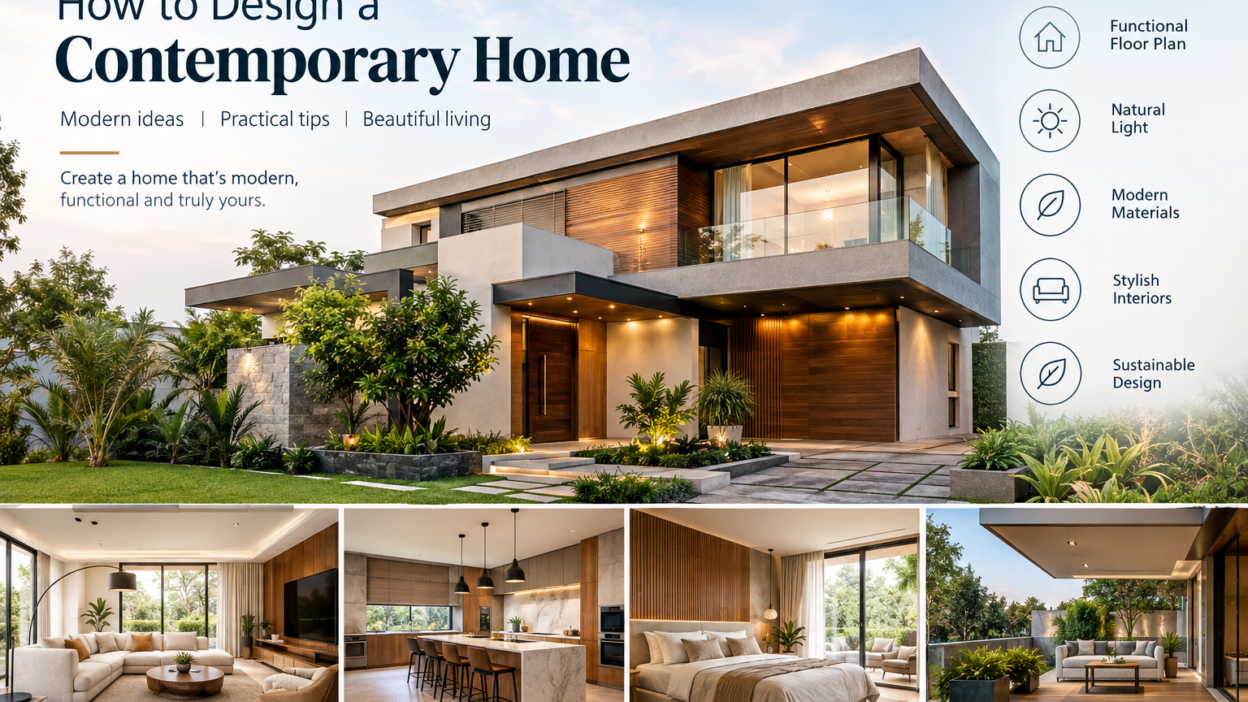
Designing a contemporary home is about creating a space that feels modern, comfortable, practical, and personal. Unlike a home that simply follows short-term trends, good contemporary home design combines clean architectural lines, natural light, functional spaces, quality materials, and thoughtful interior details.
Whether you are building a new house or renovating an existing property, understanding the basic principles of contemporary house design can help you create a home that looks beautiful while remaining comfortable for everyday life.
What Is Contemporary Home Design?
Contemporary design focuses on the way people live today. It often combines simple shapes, open spaces, natural materials, large windows, and a carefully selected color palette.
Contemporary architecture can include elements of modern, minimalist, industrial, and natural design. The result does not have to look cold or overly simple. In fact, current contemporary interiors increasingly focus on warmth, texture, comfort, and personality.
Websites such as Houzz offer extensive visual inspiration for contemporary homes, interiors, kitchens, and living spaces.
1. Start With a Functional Floor Plan
The first step in learning how to design a contemporary home is to create a floor plan that suits your lifestyle.
Instead of dividing every room with unnecessary walls, consider how different areas of the home can work together. Open-plan living areas can connect the kitchen, dining room, and lounge while still allowing each space to have its own purpose.
Think about:
- How your family uses the living room
- Where guests will enter the house
- Kitchen and dining connections
- Bedroom privacy
- Storage requirements
- Indoor and outdoor movement
- Natural ventilation
A beautiful home should also be easy to live in. Function should come before decoration.
2. Make Natural Light a Priority
Natural light is one of the most important elements of contemporary home design. Large windows, glass doors, skylights, and carefully positioned openings can make rooms feel brighter and more spacious.
Large windows can also create a stronger connection between the interior and garden or outdoor areas. Contemporary architecture frequently uses this indoor-outdoor relationship as part of the overall design.
When planning windows, consider the direction of sunlight, privacy, climate, and the views surrounding your property.
3. Choose a Simple but Interesting Color Palette
Contemporary interiors often begin with neutral colors such as white, beige, cream, gray, taupe, and natural wood tones.
However, a contemporary home does not need to be completely white.
You can add personality through:
- Warm wood
- Natural stone
- Black metal details
- Soft earthy colors
- Textured fabrics
- Artwork
- Green plants
- Carefully selected accent colors
The goal is to create balance rather than fill every room with different colors.
4. Use Natural and High-Quality Materials
Materials play a major role in creating a sophisticated contemporary house design.
Wood, stone, glass, concrete, metal, linen, and other natural textures can add depth to an otherwise simple interior. Sustainable and natural materials are also increasingly associated with contemporary architecture.
For example, a simple room can become much more interesting when you combine a smooth stone surface with warm timber cabinetry and textured upholstery.
The key is not to use expensive materials everywhere. Instead, choose a few strong materials and repeat them throughout the home for visual consistency.
5. Keep the Exterior Clean and Balanced
The exterior of a contemporary home should have a clear visual structure.
Clean horizontal or vertical lines, simple geometric forms, large windows, recessed lighting, and carefully selected materials can create a refined façade.
For a contemporary house exterior, you might combine:
- Textured plaster
- Natural stone
- Wood-look panels
- Glass
- Concrete
- Metal
- Soft exterior lighting
If you are designing a home in a hot climate, exterior shading should also be considered. Overhangs, screens, covered terraces, and properly positioned windows can improve comfort while contributing to the appearance of the house.
6. Create a Strong Connection With Nature
A contemporary home can feel much more welcoming when nature becomes part of the design.
Consider adding a courtyard, garden, balcony, terrace, indoor plants, or large windows overlooking greenery.
You can also continue the same flooring or material from an indoor living area onto an outdoor terrace to create a visual connection between the two spaces.
This approach is increasingly visible in contemporary residential architecture, where homes are designed around natural surroundings rather than being completely separated from them.
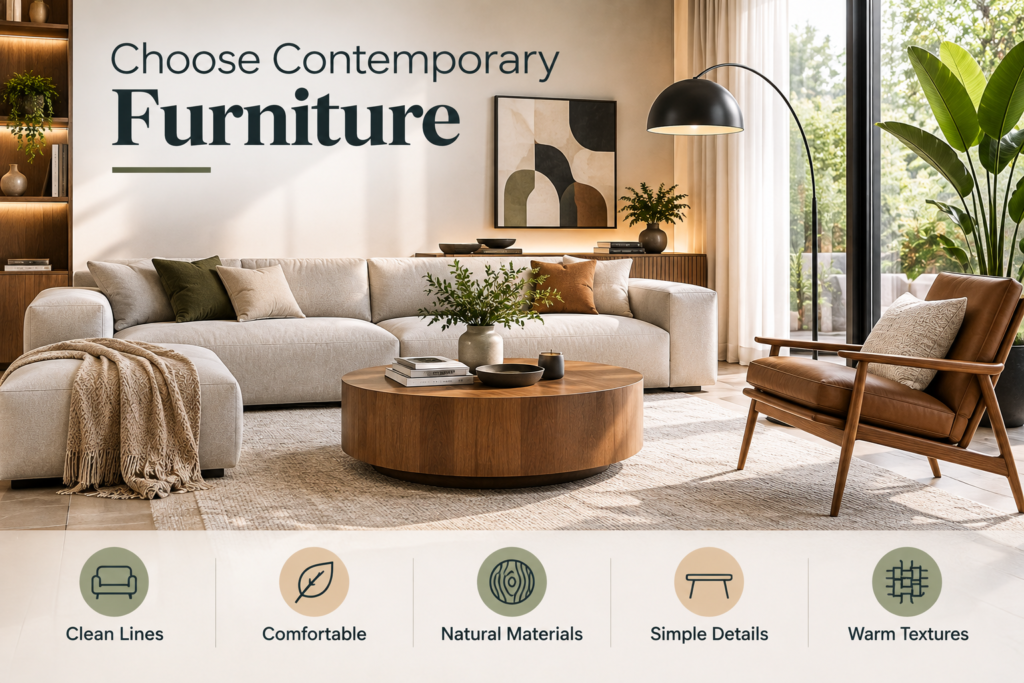
7. Choose Contemporary Furniture Carefully
Furniture should support the architecture instead of making the room feel crowded.
Look for furniture with:
- Clean silhouettes
- Comfortable proportions
- Natural fabrics
- Simple detailing
- Curved or geometric forms
- Practical storage
You do not need to buy an entire matching furniture set. A better approach is to combine a few carefully selected pieces that work together.
For example, a neutral sofa, wooden coffee table, textured rug, sculptural chair, and simple lighting fixture can create a stylish living room without excessive decoration.
8. Use Lighting as Part of the Design
Lighting can completely change the atmosphere of a contemporary home.
Instead of depending on one ceiling light, use several layers of lighting:
Ambient lighting: provides general illumination.
Task lighting: helps with activities such as cooking, reading, or working.
Accent lighting: highlights artwork, architectural features, shelves, or textured walls.
Recessed lights, pendant fixtures, wall lights, concealed LED strips, and floor lamps can all be used to create different moods.
In contemporary architecture, lighting can also emphasize the home’s geometry and materials.
9. Add Smart Storage
Contemporary design works best when spaces feel organized.
Built-in wardrobes, concealed cabinets, floating shelves, storage benches, and integrated kitchen storage can reduce visual clutter.
This is particularly useful in smaller homes. Instead of adding more furniture, look for ways to make existing architectural elements perform multiple functions.
A clean room does not necessarily mean owning fewer things. It often means giving everything a proper place.
10. Design a Contemporary Kitchen
The kitchen is often the heart of a contemporary home.
A contemporary kitchen can feature flat-panel cabinets, large work surfaces, integrated appliances, simple hardware, stone countertops, and practical storage.
Open-plan kitchens can connect directly to dining and living areas, creating a social environment for everyday family life and entertaining.
For inspiration, websites such as Architectural Digest and Dezeen provide examples of contemporary architecture and interior design from around the world.
11. Don’t Forget Comfort
One common mistake in contemporary interior design is focusing so much on appearance that comfort becomes secondary.
A successful home should feel inviting.
Add warmth with:
- Soft rugs
- Comfortable seating
- Curtains
- Timber
- Cushions
- Natural fabrics
- Plants
- Artwork
- Warm lighting
Contemporary design does not have to mean empty rooms and hard surfaces. Modern interiors can combine clean architecture with soft, comfortable details.
12. Consider Sustainable Home Design
A contemporary home should also consider long-term performance.
Energy-efficient windows, good insulation, natural ventilation, efficient lighting, water-saving fixtures, durable materials, and appropriate shading can all contribute to a more sustainable home.
Sustainable design is not only about adding technology. Good orientation, daylight, ventilation, and material selection can influence how efficiently a house performs.
Contemporary Home Design for Pakistani Houses
For homeowners in Pakistan, contemporary design can be adapted to local weather, lifestyle, and architectural preferences.
Features such as shaded windows, courtyards, cross-ventilation, terraces, privacy screens, natural materials, and practical outdoor spaces can work particularly well.
A modern Pakistani home does not need to copy a European or American house. The strongest designs combine contemporary architecture with local climate, culture, materials, and family needs.
Current Pakistani home-design discussions also highlight open living areas, natural textures, large glazing, wood-look features, and practical layouts.
Common Mistakes to Avoid
When planning a contemporary home, avoid making every element a trend.
Some common mistakes include:
- Using too many different materials
- Choosing furniture that is too large
- Ignoring storage
- Depending entirely on artificial lighting
- Creating an impractical open floor plan
- Using too many decorative features
- Forgetting climate and ventilation
- Designing for photographs instead of everyday living
A contemporary home should look impressive, but it should also feel natural and comfortable when you actually live in it.
Final Thoughts
Learning how to design a contemporary home is not simply about choosing modern furniture or giving the exterior a minimalist appearance. It is about creating a thoughtful relationship between architecture, light, materials, furniture, nature, and everyday life.
Start with a practical floor plan, bring in plenty of natural light, select a restrained material palette, create useful storage, and add personal touches that make the space feel like home.
The best contemporary home is not necessarily the one with the most dramatic design. It is the one where function, comfort, personality, and architecture work together naturally.